Word Statuses
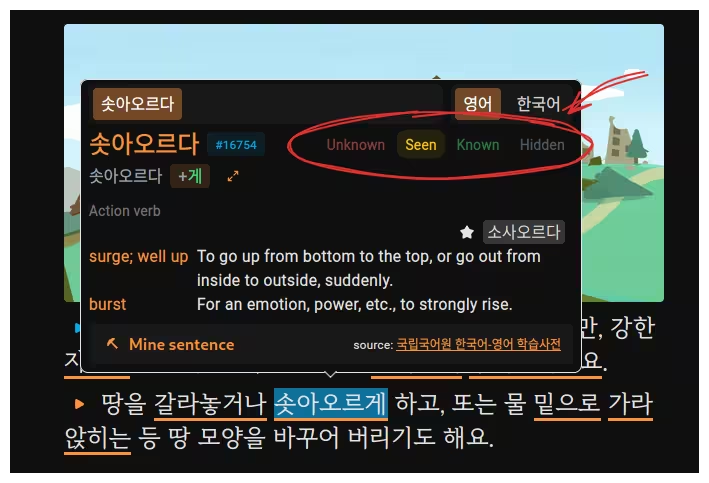
Kimchi Reader uses a system of statuses to help you keep track of your vocabulary. There are four statuses you can assign to a word:
- Unknown: You don't know the word. This is the default state.
- Seen: Up to you to decide what this means -- there is no consensus on how it should be used, but it is useful.
- Known: You know the word.
- Hidden: (Optional) You want to hide this word. This excludes it from stats and from being underlined.
Statuses are
How to Change a Word's Status
You can change a word's status by
Keyboard Shortcuts
You can use the keyboard keys 1 2 3 4 respectively to change the status of a word to the corresponding status. If the mouse is hovering over a specific word while pressing the key, the status of that word will be changed.
Note that in the case of ambiguity, the shortcut will open the dictionary popup. If the popup is already open, it will change the status of the currently selected word.
Customize Colors
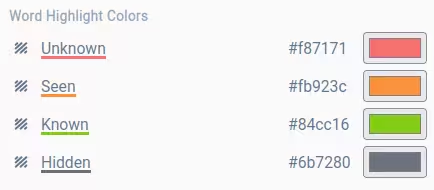
You can customize the colors of the statuses in the settings (Appearance) and in the settings of the web extension.
Handling Ambiguity
When Kimchi Reader parses a word, it can't always land on a single lemma. The same surface form sometimes maps to several different dictionary words, and the lemmatizer has no sure way to tell which one the author meant.
This is where the
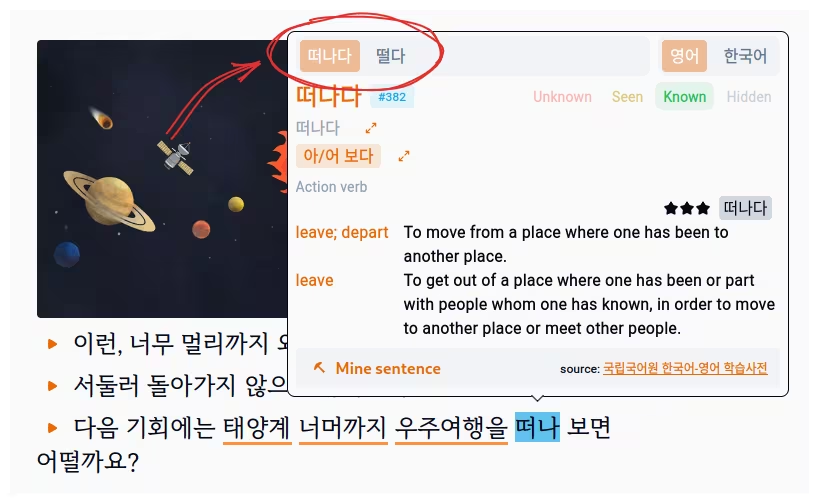
It won't always be right, and that is normal. Korean is hard, and the model is making a statistical bet rather than reading your mind. When it picks the wrong lemma, you just switch to the correct tab yourself. That is exactly why the other tabs are still there.
To be clear, the real win here is on the stats side, not in picking for you. You are perfectly capable of spotting the right tab on your own. What the solver buys us is a believable answer to "which lemma did you actually read", and that is what your stats and recommendations are built on.
You also get a say in how the solver affects
Trust the ambiguity solver (default): the underline follows only the lemma the solver chose. If it picks a lemma you don't know, the word stays underlined even when you know one of its other lemmas.Optimistic : a word stops being underlined as soon as any of its possible lemmas is one you already know, so you can always clear an underline you recognise.
The recommendation system always trusts the solver and cannot be changed.
Importing
Check the import page for more information on how to import your vocabulary. You can import from various sources like Anki and LingQ. There is an additional "Text" importer that lets you import any kind of text you may have.
Exporting
You can export your word statuses in the stats page showing all your words statuses. There is a button to export the data in a CSV format. This page is accessible even without an active subscription.